
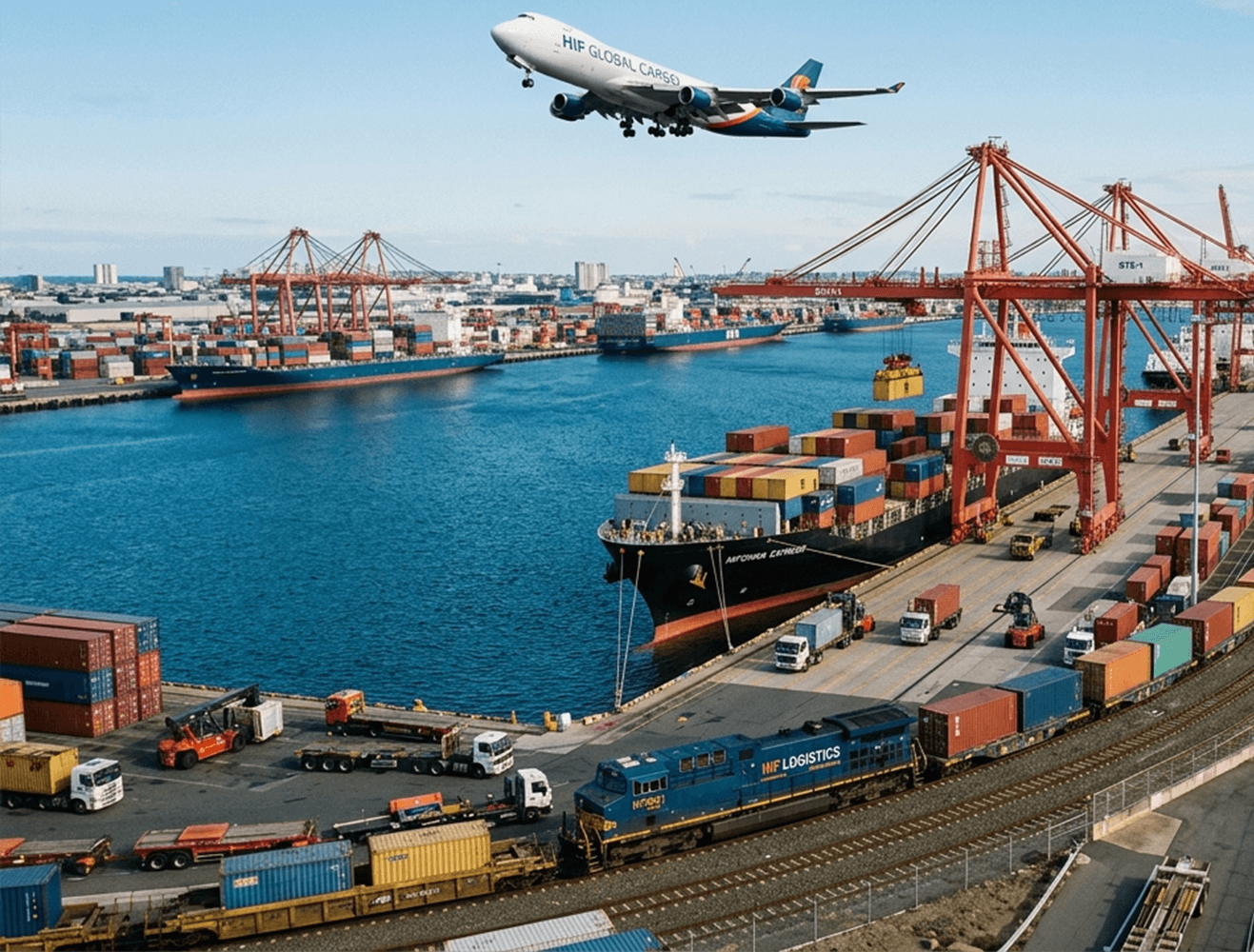
HIF Weekly News – Asian Port Congestion, Rising Trans-Pacific Rates and Shifting Global Trade Routes
The global freight market is entering the second half of September with a new wave of supply chain uncertainty.
Over the past week, port congestion in Asia, rising trans-Pacific freight rates, the gradual return of container services to the Suez Canal, and renewed geopolitical risks in the Middle East have become the major themes shaping international shipping.
For importers and exporters, the message is clear: shipping capacity may still be available, but reliability and routing flexibility are becoming increasingly important.
1. Asian Port Congestion Continues to Disrupt Schedules
Severe weather disruptions in Asia continue to affect vessel schedules and port operations.
Recent reports indicate that congestion at major Chinese ports has resulted in significant vessel delays, while disruptions following typhoons have absorbed substantial container capacity. Shanghai, Ningbo and other Asian gateways have faced operational pressure, creating knock-on effects across vessel schedules and transshipment hubs.
The problem is not limited to a single port.
When vessels arrive late at one gateway, the disruption can propagate through the entire rotation, resulting in:
- Delayed vessel departures
- Rolled bookings
- Equipment shortages
- Missed connections
- Longer transit times
- Higher spot freight rates
HIF Logistics Solution
For shippers sourcing from China, relying on a single port or carrier can create unnecessary risk.
HIF Logistics can evaluate alternative Chinese gateways, carrier options and sailing schedules according to the actual operational situation.
When congestion affects one port, customers can consider alternative loading points or different services rather than simply waiting for the original vessel.
Our integrated FCL, LCL, ocean, air and multimodal transportation capabilities allow us to build contingency plans around each shipment.
2. Trans-Pacific Freight Rates Remain Under Pressure
The trans-Pacific market has become particularly tight.
Container spot rates on Asia–US routes have strengthened as resilient demand combines with congestion at Asian ports. Recent market data shows rates to the US West Coast and East Coast remaining at elevated levels, with Shanghai–Los Angeles and Shanghai–New York rates both increasing week over week.
The situation is also being amplified by an early or extended peak-season effect.
The Port of Los Angeles processed approximately 2.9 million TEUs during June–August, its busiest three-month period on record, as retailers accelerated imports ahead of the holiday season and in response to tariff and fuel-cost uncertainty.
For importers, this creates a challenging combination:
strong demand + limited effective capacity + port congestion = higher logistics costs and less schedule certainty.
HIF Logistics Solution
HIF does not approach freight procurement as a simple search for the lowest ocean rate.
Instead, we compare:
Carrier + Port + Sailing Schedule + Transit Time + Equipment + Destination Service
For customers with urgent cargo, we can also evaluate a combination of:
Ocean Freight → Air Freight → Rail → Trucking
This allows businesses to balance cost, speed and reliability instead of being locked into one transportation mode.
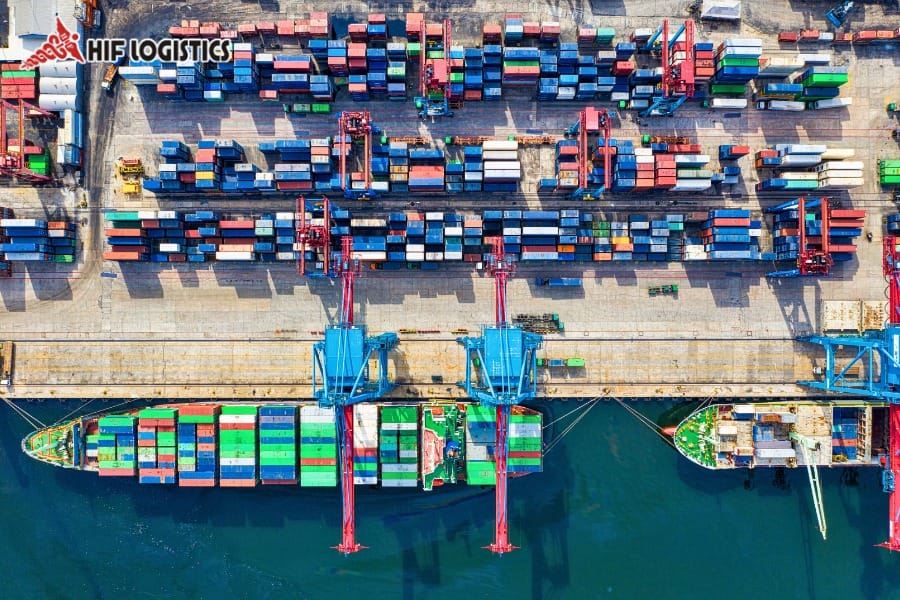
3. Major Carriers Are Accelerating Their Return to the Suez Canal
One of the most important developments of the past week is the accelerating return of container services to the Red Sea and Suez Canal.
On September 14, Maersk and Hapag-Lloyd announced that four additional Gemini services — AE5, AE11, AE12 and ME2 — would return to the Suez route. The move follows earlier service restorations and reflects growing confidence in the operational advantages of the shorter Asia–Europe route.
COSCO and OOCL are also preparing to resume additional Red Sea services.
This could eventually reduce transit times between Asia and Europe compared with the much longer Cape of Good Hope route. However, the security situation remains uncertain, and some cargo owners have questioned whether the return to the Red Sea is happening too quickly.
This creates an unusual situation for the market:
The fastest route is becoming available again, but the safest route cannot yet be taken for granted.
HIF Logistics Solution
For Europe-bound shipments, HIF can help customers evaluate different routing strategies based on their cargo requirements:
- Suez Canal services
- Cape of Good Hope services
- Alternative transshipment options
- Different European gateways
- Rail and road connections
- Air freight for urgent shipments
Instead of committing customers to one route months in advance, HIF can continuously evaluate the trade-off between transit time, freight cost and operational risk.
4. Middle East Risks Continue to Affect Global Logistics Costs
The situation around the Middle East remains another major variable.
Shipping traffic through the Strait of Hormuz has fallen dramatically amid escalating regional tensions. Reuters reported that only a small number of vessels transited the waterway on September 10, compared with the much higher pre-conflict average.
The disruption is particularly important for energy markets.
Oil prices rose sharply last week as attacks on shipping and energy infrastructure increased concerns over fuel supplies. Higher bunker costs can eventually translate into higher transportation costs across global logistics networks.
At the same time, the Red Sea situation remains fluid, creating additional uncertainty for carriers operating between Asia, the Middle East and Europe.
HIF Logistics Solution
For customers shipping to the Middle East, route flexibility is particularly important.
HIF can help customers evaluate different combinations of:
Ocean Freight + Transshipment + Regional Trucking + Warehousing + Last-Mile Delivery
For cargo that cannot tolerate long ocean delays, air freight can also be considered as a contingency option.
The objective is not simply to move cargo through the cheapest route, but to maintain supply chain continuity when geopolitical conditions change.
5. Panama Canal Capacity Is Becoming Another Risk Factor
The Panama Canal is also facing renewed pressure from drought conditions.
The canal authority is expected to reduce daily vessel capacity to approximately 29.5 transits per day from October, as worsening drought conditions reduce water availability. The canal is an important gateway for global trade, particularly for routes involving Asia and the US East Coast.
For shippers, this creates another potential bottleneck just as global supply chains are entering the final quarter of the year.
If Panama Canal capacity becomes more constrained, carriers may need to adjust schedules or consider alternative routing.
HIF Logistics Solution
HIF can help customers evaluate alternative gateways and multimodal connections before disruptions become critical.
For US-bound cargo, this may include comparing:
US West Coast + Rail
versus
US East Coast + Ocean
versus
Alternative Port + Inland Trucking/Rail
The right choice depends on the cargo, delivery deadline, inventory position and total landed cost.
What Should Importers Do Now?
The current freight market does not necessarily mean that every shipping lane will experience continuously rising prices.
Instead, the market is becoming increasingly fragmented by trade lane and region.
Trans-Pacific rates are being supported by strong demand and Asian congestion, while some Asia–Europe rates are experiencing different dynamics as carriers gradually restore Suez services.
For importers, the most important priorities are therefore:
1. Secure capacity earlier
Do not wait until the last minute when shipping during high-demand periods.
2. Maintain multiple routing options
A backup port or carrier can become extremely valuable when weather or geopolitical events disrupt the original plan.
3. Consider total landed cost
The cheapest freight rate is not necessarily the cheapest logistics solution.
Delays can generate additional:
- Storage fees
- Demurrage
- Detention
- Inventory costs
- Production delays
- Missed sales opportunities
4. Build multimodal flexibility
Ocean freight should not always be viewed as the only solution.
For urgent shipments, combining ocean freight with air, rail or trucking can significantly improve supply chain resilience.
How HIF Logistics Helps Businesses Navigate a More Uncertain Freight Market
At HIF Logistics, we believe the role of a modern freight forwarder is not simply to book a container.
It is to provide options when the original shipping plan no longer works.
With experience in international logistics and a network covering 80+ countries and 200+ ports, HIF provides customers with integrated logistics solutions covering:
- Ocean Freight
- Air Freight
- FCL & LCL
- DDP / DDU
- China Sourcing
- Customs Clearance
- Warehousing
- Factory Verification
- Cargo Inspection
- Loading Supervision
- FBA / WFS Fulfillment
- Multimodal Transportation
- Heavy & Oversized Cargo
Our approach is simple:
When a port becomes congested, find another option.
When capacity becomes tight, look for additional carrier solutions.
When ocean transit becomes unreliable, evaluate air or multimodal alternatives.
When customers need more than transportation, coordinate sourcing, inspection, customs, warehousing and delivery as one integrated solution.
The Bottom Line
The latest developments show that global logistics is becoming less predictable.
Weather can disrupt Asian ports.
Strong demand can tighten trans-Pacific capacity.
Geopolitical risks can change major shipping routes.
Canal restrictions can create new bottlenecks.
For businesses importing from China, flexibility is becoming a competitive advantage.
At HIF Logistics, our goal is not simply to provide a freight quotation.
Our goal is to help customers keep their supply chains moving — even when the market changes.
One shipment. Multiple options. One experienced logistics partner.
—————————————
🚢Get a quote from us
Choose your preferred way to contact us, and our team will respond within 24 hours on business days.
